
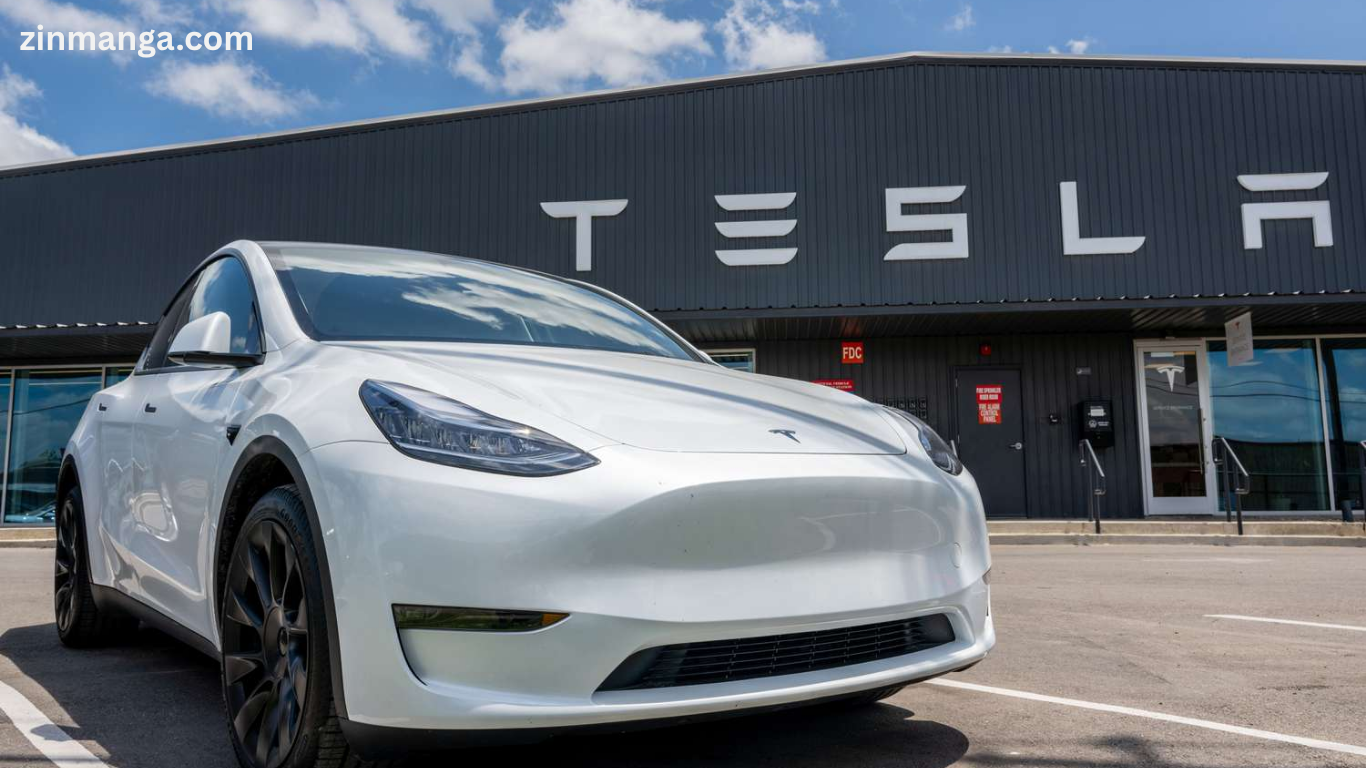
Tesla is working to expand its business beyond electric vehicles as the company explores new opportunities in artificial intelligence, robotics, energy storage, and autonomous driving technology. Although electric cars remain central to its identity, the company is increasingly presenting itself as a technology business with ambitions across several industries.
The shift reflects Tesla’s effort to develop new sources of growth while responding to changing conditions in the global automotive market. Competition among electric vehicle manufacturers has increased, consumers have become more price-conscious, and established automakers continue to introduce new electric models. These developments have encouraged Tesla to look beyond vehicle sales and explore technologies that could support its long-term business plans.
Tesla’s Changing Business Strategy
Tesla became widely known for helping bring electric vehicles into the mainstream. Its cars attracted attention through their battery range, acceleration, software features, and access to a growing charging network. Over time, the company established itself as an important competitor in the automotive industry.
However, the electric vehicle market has changed considerably. More companies now offer battery-powered cars, giving customers a wider selection of models, prices, and features. Manufacturers in China have also become major competitors, particularly in markets where affordable electric vehicles are attracting strong demand.
As competition grows, relying mainly on vehicle sales can expose Tesla to pressure from lower prices, changing consumer preferences, and rising production costs. Expanding into other technology markets could help the company reduce its dependence on a single source of revenue.
Tesla’s broader strategy focuses on using its existing technical capabilities in new ways. Battery development, artificial intelligence, software engineering, and large-scale manufacturing are relevant to several of the markets the company wants to enter. If Tesla can successfully apply these skills beyond automobiles, it may create additional opportunities for growth.
Nevertheless, diversification does not guarantee success. Each new market has different customers, competitors, regulations, and technical requirements. Tesla must demonstrate that its new products can solve real problems and generate sustainable financial returns.
Artificial Intelligence Becomes a Major Priority
Artificial intelligence is an important part of Tesla’s long-term plans. The company uses AI-related technology in driver-assistance systems and is developing more advanced capabilities for interpreting road conditions, identifying objects, and responding to changing traffic situations.
Tesla collects large amounts of driving data through its vehicles. This information can support the development and testing of software designed to improve how vehicles understand their surroundings. The company aims to use advances in computing and machine learning to make its driving systems more capable over time.
However, there is an important distinction between driver assistance and fully autonomous driving. Systems that help with steering, braking, or maintaining a safe distance do not automatically make a vehicle capable of operating without human supervision. Drivers must follow the instructions and limitations of the particular system they use.
The commercial opportunity for Tesla could extend beyond selling vehicles equipped with software features. If the company develops reliable autonomous technology that meets regulatory requirements, it could potentially support new transportation services and software-based revenue.
The challenge is that autonomous driving remains technically difficult. Roads contain unpredictable situations, including poor weather, unusual obstacles, construction zones, and the unexpected actions of pedestrians or other drivers. A system must handle these situations safely and consistently before it can be trusted to operate independently.
Regulatory approval, safety performance, and public acceptance will therefore play major roles in determining how quickly Tesla can expand its AI-related business.
Robotics Could Open Another Market
Robotics is another area receiving attention as Tesla broadens its ambitions. The company has been developing Optimus, a humanoid robot designed to perform certain physical tasks. The project reflects Tesla’s interest in applying artificial intelligence and manufacturing expertise to machines that can work in industrial and potentially other environments.
Humanoid robots could eventually help with repetitive, physically demanding, or potentially hazardous tasks. In factories, for example, robots may assist with moving materials, handling components, and performing routine operations. Businesses could benefit if these machines become dependable, affordable, and easier to deploy than alternative solutions.
Tesla has an existing manufacturing environment where robotic technology can be tested and improved. Its experience with vehicle production may help the company understand how machines can operate alongside human workers and how automated processes can be integrated into large facilities.
Even so, building a humanoid robot that performs reliably in real-world conditions is a substantial challenge. Robots must recognize objects, maintain balance, respond to unexpected situations, and complete tasks without constant human intervention. A successful demonstration does not necessarily prove that a machine is ready for widespread commercial use.
Cost is another important consideration. Companies will need to determine whether robots can perform useful work at a competitive price after accounting for purchase costs, maintenance, software, and supervision.
For Tesla, robotics could eventually become a meaningful business, but its financial importance will depend on practical performance and customer demand rather than ambitious projections alone.
Energy Storage Expands Tesla’s Opportunities
Energy storage is one of the clearest examples of Tesla’s business extending beyond electric vehicles. The company develops battery-based products designed to store electricity for homes, businesses, and larger energy projects.
Products such as Powerwall and Megapack serve different needs. Powerwall is intended primarily for residential energy storage, while Megapack supports larger installations used by utilities and commercial customers.
Energy storage can help manage the differences between electricity production and consumption. Solar panels, for example, may generate substantial electricity during the day when household demand is relatively low. A battery can store some of that energy for use later, depending on system design and local conditions.
Large battery installations can also help electricity providers manage periods of high demand and integrate renewable energy into the power grid. As more electricity systems use solar and wind power, storage may become increasingly important because these sources do not produce energy at a constant rate.
This market offers Tesla an opportunity to serve customers who may not be interested in buying its vehicles. Utilities, energy developers, businesses, and homeowners have different purchasing needs, creating a wider customer base.
However, energy storage is also competitive. Battery manufacturers and energy technology companies are developing their own systems, while project economics depend on battery prices, installation costs, electricity markets, and local regulations.
Tesla’s long-term performance in this sector will depend on its ability to manufacture products efficiently, deliver projects reliably, and compete on overall value.
Charging Infrastructure Remains an Important Advantage
Tesla’s charging network has played a major role in the development of its electric vehicle business. Access to reliable charging can influence whether consumers choose an electric car, especially for people who regularly travel long distances.
The company has also expanded access to parts of its charging infrastructure for vehicles made by other manufacturers. Wider compatibility can increase the usefulness of the network and create opportunities for Tesla to serve drivers beyond its own customer base.
Charging infrastructure may become more valuable as electric vehicle ownership grows. Drivers need convenient places to recharge, while businesses and property owners may look for ways to attract customers through charging facilities.
Operating a charging network involves more than installing equipment. Stations require electricity, maintenance, software support, and careful management of capacity. Charging speeds can also vary according to the vehicle, battery condition, temperature, and available power.
Tesla’s experience in building and operating a large network could provide an advantage, but continued investment will be necessary to maintain reliability and expand coverage.
A broader charging business also fits Tesla’s effort to become more than a vehicle manufacturer. The company can potentially generate value through the infrastructure that supports electric transportation, not only through the vehicles themselves.
Software and Digital Services Could Support Revenue
Software is another important part of Tesla’s strategy. Modern vehicles increasingly depend on digital systems for navigation, entertainment, vehicle settings, energy management, and driver assistance.
Tesla can deliver some improvements through software updates, allowing compatible vehicles to receive new features without requiring a complete hardware replacement. This approach can help the company improve its products after customers have purchased them.
Software may also create opportunities for recurring revenue. Depending on availability, eligibility, and local regulations, customers may pay for certain connectivity services or advanced vehicle capabilities.
The potential advantage is that digital services can sometimes produce revenue without requiring the company to manufacture an entirely new vehicle for every sale. However, customers must believe that the features provide enough value to justify their cost.
Software reliability is especially important when features affect vehicle operation. Updates must be carefully tested, and customers need clear information about what each system can and cannot do.
Tesla’s future software business will depend on customer satisfaction, technical performance, and its ability to introduce useful features without compromising safety or trust.
Competition Is Changing the Electric Vehicle Market
Tesla’s expansion is taking place during a period of intense competition in the automotive industry. Traditional automakers are investing in electric vehicles, while newer manufacturers are developing models aimed at different price ranges and customer groups.
Chinese companies have become particularly important competitors because of their battery supply chains, manufacturing capacity, and growing selection of electric vehicles. In several markets, buyers can choose from models that compete on price, range, technology, and interior features.
This competition places pressure on Tesla to maintain its appeal. Brand recognition and software capabilities can help, but consumers also consider affordability, comfort, reliability, service availability, and the cost of ownership.
Price reductions may help attract buyers, but they can also affect profit margins. Vehicle demand can change with interest rates, government incentives, fuel prices, and household financial conditions.
Expanding into energy storage, robotics, and software could help Tesla develop additional revenue streams. Yet the company must still compete effectively in its core automotive business, which provides the foundation for many of its other projects.
A broader business strategy is therefore not a replacement for producing attractive vehicles. It is an attempt to build new opportunities around the technology, manufacturing capabilities, and customer relationships Tesla already has.
Manufacturing Efficiency Remains Essential
Manufacturing has always been central to Tesla’s business model. The company has invested in factories, production equipment, battery systems, and processes designed to produce vehicles at scale.
Efficient manufacturing can help lower costs and make products more competitive. It can also support Tesla’s plans to expand into other industries, especially where large production volumes are needed to achieve affordable pricing.
However, expanding into several markets simultaneously can place pressure on resources. Vehicle production, battery manufacturing, AI computing, robotics development, and charging infrastructure all require capital, engineering talent, and management attention.
Tesla must decide how to allocate these resources while meeting customer demand and maintaining quality. If too much investment is directed toward projects that take years to generate meaningful revenue, the company could face financial pressure.
Manufacturing challenges can also affect product launches. New designs and production processes may require adjustments before they operate efficiently. Delays, quality issues, or higher-than-expected costs can weaken the financial benefits of a new product.
For Tesla, the ability to turn technical innovation into reliable mass production may be just as important as developing new technologies in the first place.
Financial Risks and Investor Expectations
Tesla’s wider strategy creates both opportunities and uncertainties for investors. Some may view the company as a technology business with potential in AI, robotics, energy, and transportation services. Others may focus on vehicle sales, profit margins, competition, and the cost of funding ambitious projects.
The difference between these perspectives can influence how investors evaluate Tesla. Expectations about future growth may be based partly on technologies that are still under development rather than established sources of income.
This makes it important to distinguish between current business performance and long-term possibilities. Announced projects, demonstrations, and development milestones do not automatically translate into commercial success.
Investors may look at revenue growth, operating costs, cash flow, production efficiency, and demand for energy products when assessing whether Tesla’s expansion is creating lasting value. They may also examine how much the company spends on research, computing infrastructure, factories, and new product development.
A diversified business can reduce dependence on one market, but it can also increase complexity. If several major projects require significant funding at the same time, Tesla must manage the risk that some will take longer than expected to become profitable.
The company’s long-term financial position will depend on balancing investment in future technologies with the need to maintain a healthy core business.
Sustainability and the Future of Energy
Tesla’s expansion into energy storage supports a wider shift toward cleaner electricity and transportation. Electric vehicles can reduce direct exhaust emissions, while battery storage can help renewable energy contribute more effectively to electricity supply.
The overall environmental impact depends on several factors, including how electricity is generated, how batteries are manufactured, the sourcing of raw materials, and how products are recycled at the end of their useful lives.
Battery production requires resources and energy, making responsible sourcing and recycling important issues for the industry. Manufacturers also face pressure to improve supply-chain transparency and reduce the environmental impact of their factories.
Energy storage may help address some challenges associated with renewable electricity, but it is not a complete solution to every problem facing power grids. Electricity networks also require transmission capacity, flexible generation, effective planning, and other technologies.
Tesla’s opportunity lies in developing products that work as part of this larger system. If the company can deliver affordable storage and dependable electric transportation, it may benefit from growing demand for energy-related technologies.
Its performance will ultimately depend on practical results, including product costs, reliability, and measurable benefits for customers.
What Tesla’s Expansion Means for Consumers
For consumers, Tesla’s broader strategy could lead to a more connected range of transportation and energy products. A household might use an electric vehicle, a home battery, and compatible charging equipment as part of a wider energy system.
Businesses could also benefit from larger storage systems, commercial charging infrastructure, and future automation technologies. These products may help customers manage electricity use, support electric fleets, or improve certain operational processes.
However, consumers should evaluate each product according to their individual needs. A home battery, for example, may offer greater value in an area with frequent outages or suitable electricity pricing arrangements than in a location where those benefits are limited.
Similarly, electric vehicle ownership depends on factors such as purchase price, driving habits, access to charging, maintenance requirements, and local electricity costs.
New technologies can offer advantages, but customers should avoid assuming that every announced feature or future product will become available everywhere. Availability, pricing, technical capabilities, and regulatory requirements can differ between regions.
Tesla’s ability to turn its wider strategy into practical benefits for customers will be an important measure of its success.
The Road Ahead for Tesla
Tesla’s future will depend on how successfully it combines its established vehicle business with its newer technology ambitions. Electric cars are likely to remain important, but energy storage, AI, robotics, charging infrastructure, and software could play larger roles in its long-term development.
Some of these areas already have commercial products and customers, while others remain at earlier stages of development. Their growth rates and financial contributions may differ considerably.
Tesla will need to demonstrate that its new technologies can work reliably, attract customers, and compete with alternatives. It must also manage investment carefully and continue responding to changes in the automotive market.
The company’s established manufacturing capabilities and experience with batteries and software provide a foundation for expansion. Still, success will depend on execution rather than ambition alone.
The coming years may reveal whether Tesla can build a balanced business that generates meaningful revenue across multiple industries or whether its automotive operations remain the dominant source of its financial performance.
Frequently Asked Questions
Why is Tesla expanding beyond electric vehicles?
Tesla is exploring new markets to create additional sources of revenue, reduce its dependence on vehicle sales, and apply its expertise in batteries, software, manufacturing, and artificial intelligence to other industries.
What businesses is Tesla developing beyond electric cars?
Tesla’s broader activities include energy storage, charging infrastructure, vehicle software, AI-related technologies, and humanoid robotics. The commercial maturity of these areas varies.
How does Tesla make money from energy storage?
Tesla sells battery systems for residential, commercial, and utility-scale applications. These systems store electricity for later use and can help customers manage energy demand or integrate renewable power.
What is Tesla’s Optimus robot?
Optimus is Tesla’s humanoid robotics project. The company aims to develop robots capable of performing useful physical tasks, including certain repetitive activities in industrial environments. Widespread commercial success will depend on reliability, cost, and practical performance.
Can artificial intelligence become a major part of Tesla’s business?
AI could support driver-assistance software, future autonomous transportation services, and robotics. However, the scale of its commercial contribution will depend on technical progress, safety, regulatory approval, and customer demand.
Does Tesla’s expansion beyond cars reduce its business risks?
Diversification may reduce dependence on vehicle sales, but it also introduces new risks. Tesla must manage development costs, competition, manufacturing challenges, and the possibility that some projects will take longer than expected to become profitable.
What could determine Tesla’s long-term success?
Tesla’s long-term success will depend on vehicle demand, manufacturing efficiency, financial discipline, product reliability, and its ability to turn new technologies into commercially successful businesses.
Conclusion
Tesla is broadening its business strategy beyond electric vehicles by investing in artificial intelligence, robotics, energy storage, charging infrastructure, and software services. These areas offer opportunities to reach new customers and develop additional sources of revenue while building on the company’s existing technical capabilities.
The strategy also brings significant challenges. Competition is increasing, advanced technologies require extensive development, and large investments do not guarantee commercial success. Tesla must continue producing competitive vehicles while proving that its other businesses can deliver reliable products and sustainable financial returns.
