
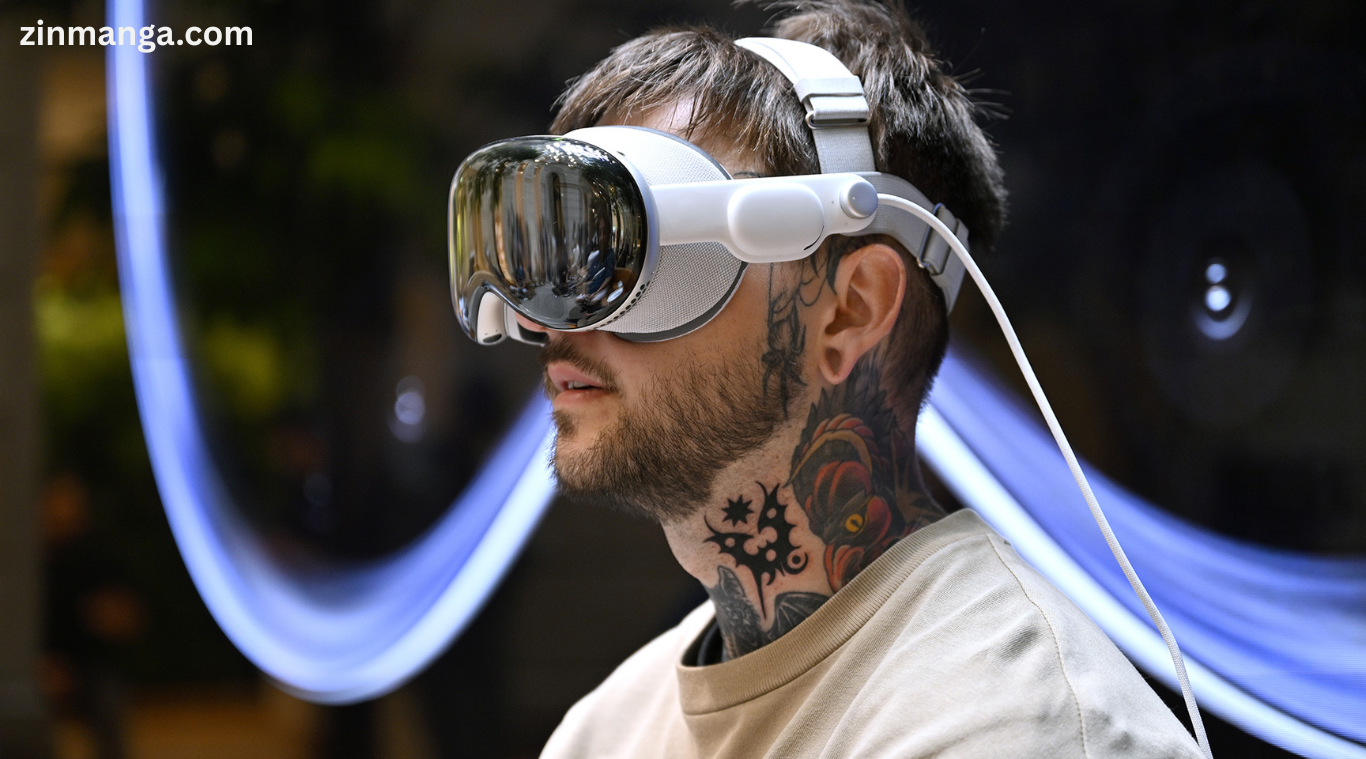
Apple Vision Pro 2 represents Apple’s continued effort to develop spatial computing as a new way of interacting with digital content. Instead of relying only on traditional displays such as televisions, monitors, tablets, and smartphones, spatial computing places digital information and entertainment within the user’s surrounding environment.
The first-generation Vision Pro introduced Apple’s approach to immersive computing, combining high-resolution displays, cameras, sensors, spatial audio, and gesture-based controls. A newer generation has the opportunity to build on that foundation while addressing areas that matter to everyday users, including comfort, performance, content availability, and ease of use.
A Different Approach to Digital Entertainment
Traditional entertainment usually requires users to look at a physical display. Whether watching a movie on a television or playing a game on a monitor, the digital content remains within the boundaries of the screen.
A spatial computing headset changes that relationship. Virtual screens can appear within the user’s environment, while supported content can create a stronger sense of depth and immersion.
This does not necessarily replace televisions or conventional displays. Instead, it provides another option for people who want a more personal and immersive entertainment experience.
Immersive Movie Watching
One of the most obvious applications for Vision Pro 2 is watching movies.
A virtual cinema environment can make a film appear on a much larger screen than the physical space available to the user. This can be particularly useful for people living in smaller homes or for travelers who want a large-screen experience without carrying a television.
The experience can also reduce distractions because the virtual environment can place the viewer’s attention primarily on the content.
However, long viewing sessions depend heavily on comfort. Even impressive image quality cannot compensate for a headset that feels uncomfortable after extended use.
Spatial Video and 3D Content
Spatial video is another important part of Apple’s vision for immersive entertainment.
Instead of displaying video as a flat image, spatial content can provide a stronger sense of depth. This can make memories, travel footage, and other visual experiences feel more lifelike.
The technology could become increasingly useful as more people create and share spatial videos. However, the quality and availability of content remain important factors in determining how valuable the feature becomes.
Gaming Experience
Gaming is another area where spatial computing can offer new possibilities.
Traditional games generally use a television, monitor, handheld display, or smartphone screen. A spatial headset can place digital objects within a user’s field of view and allow interaction through hand tracking, controllers, or other input methods.
This can create a more immersive gaming environment, particularly for titles designed specifically around spatial interaction.
The challenge is building a large enough library of high-quality games that take advantage of the technology rather than simply reproducing traditional experiences on a virtual screen.
Virtual Large Screens
One of the practical advantages of a spatial headset is the ability to create large virtual displays without requiring physical monitors.
A user can potentially work with multiple virtual windows positioned around them. For entertainment, the same concept can create a large private screen.
This flexibility may be especially useful for people who travel frequently or work in locations where carrying multiple physical displays is impractical.
Spatial Audio
Visual immersion is only one part of the experience. Sound also plays a major role in making digital environments feel convincing.
Spatial audio can make sound appear to originate from different locations around the user. This can improve movies, games, music, and interactive applications.
When combined with immersive visuals, spatial audio can make digital entertainment feel more connected to the surrounding environment.
Interaction Through Hands and Eyes
Apple’s spatial computing interface relies heavily on natural forms of interaction.
Instead of depending entirely on physical buttons or a traditional mouse, users can interact with supported content using eye tracking, hand gestures, and voice commands.
This approach can make certain entertainment experiences more intuitive. A user may be able to look at an item and interact with it without reaching for a controller.
At the same time, users may need time to become comfortable with new interaction methods, especially when applications behave differently from conventional smartphone or computer interfaces.
The Role of Apple Ecosystem Integration
Apple’s wider ecosystem is an important part of the Vision Pro experience.
Users who already own Apple devices may benefit from integration with existing services, applications, accounts, and content libraries.
This can make it easier to move between devices and continue activities in different environments.
The success of the headset therefore depends not only on its hardware but also on how effectively Apple connects it to the broader ecosystem.
Entertainment Without a Television
One potential change introduced by spatial computing is the ability to enjoy large-screen entertainment without owning a large physical display.
A headset can create a virtual screen that appears significantly larger than the device itself. This could appeal to users who want a private cinema-like experience.
For people sharing a home, a private virtual display can also allow one person to watch content without occupying the television.
However, traditional televisions remain more convenient for shared viewing because everyone in the room can watch simultaneously without wearing a headset.
Social Entertainment
Social interaction presents a more complicated challenge.
Traditional entertainment is often shared with other people in the same physical space. A family can watch television together, or friends can sit around a gaming console.
Headsets create a more individual experience. While virtual environments can support communication and shared digital experiences, wearing a headset can also separate the user from people physically nearby.
Future spatial computing systems may therefore need to find better ways to combine immersive experiences with social interaction.
Comfort Remains Important
Comfort is one of the biggest challenges facing immersive headsets.
A device worn on the head for several hours needs to manage weight, balance, heat, and pressure effectively.
Users may tolerate a headset for a short movie or gaming session but have different expectations for longer periods.
Improvements in materials, weight distribution, battery design, and overall ergonomics could therefore be just as important as improvements in processor performance.
Battery Life and Mobility
Battery life also affects how people use spatial computing devices.
Entertainment sessions can consume significant power because the headset continuously operates displays, cameras, sensors, processors, and audio systems.
Longer battery endurance could allow users to spend more time watching content or playing games without interrupting the experience.
Mobility is another factor. A headset can provide a large virtual screen in different locations, but users still need to consider battery charging and the physical equipment required.
Content Availability
Hardware alone cannot create a successful entertainment platform. Users need compelling content.
Developers, filmmakers, game studios, and streaming services all play a role in building a spatial entertainment ecosystem.
If only a limited number of applications take full advantage of spatial computing, users may primarily use the headset as a virtual television rather than experiencing entirely new forms of entertainment.
A broader content library could make spatial computing more useful over time.
Developers and New Experiences
Developers have an opportunity to experiment with applications that are difficult to reproduce on traditional screens.
Interactive educational experiences, immersive documentaries, virtual tours, creative applications, and spatial games could all benefit from the technology.
The most interesting applications may come from ideas that were not possible or practical on smartphones and computers.
This means the long-term impact of Vision Pro 2 will depend partly on what developers choose to build.
Productivity and Entertainment Combined
Although entertainment is a major focus, spatial computing can also combine productivity and leisure.
A user could potentially move from a virtual workspace to a large entertainment screen without changing devices.
Multiple virtual windows can provide an expansive workspace, while immersive video and games can offer a different experience when work is finished.
This combination could make a spatial computer more useful throughout the day rather than limiting it to entertainment.
Privacy Considerations
Personal entertainment through a headset can provide a degree of privacy because the displayed content is visible primarily to the wearer.
This can be useful when traveling or working in shared environments.
However, spatial devices also use cameras and sensors to understand the user’s surroundings. As with other connected devices, privacy and data handling remain important considerations.
Users should understand what information applications collect and how permissions are managed.
Who Could Benefit From Vision Pro 2?
The appeal of Vision Pro 2 will vary depending on how people consume digital content.
Movie enthusiasts may appreciate large virtual screens and immersive video. Gamers may be interested in spatial interaction. Frequent travelers could benefit from having a portable private cinema. Creative professionals may explore spatial content creation and visualization.
On the other hand, users who mainly watch television with family or prefer conventional gaming may find traditional devices more convenient.
The Future of Spatial Entertainment
The larger significance of Vision Pro 2 may not come from replacing televisions or computers immediately. Instead, it could help establish new expectations for how people interact with digital content.
As displays, processors, sensors, and software improve, spatial devices could become smaller and more comfortable while supporting more applications.
Entertainment companies may also experiment with content specifically designed for immersive environments.
Over time, this could create a new category between conventional screens and fully immersive virtual reality.
Frequently Asked Questions
What is Apple Vision Pro 2?
Apple Vision Pro 2 is a newer generation of Apple’s spatial computing headset concept, designed to combine immersive displays, digital applications, spatial audio, and natural interaction methods.
Can Vision Pro 2 replace a television?
It can provide a large private virtual screen, but it does not necessarily replace a television for households that regularly watch content together.
Is Vision Pro 2 useful for gaming?
Spatial computing can provide new gaming possibilities through immersive displays and spatial interaction. The overall experience depends heavily on available games and software support.
Can Vision Pro 2 be used for movies?
Immersive movie viewing is one of the potential uses of the platform. A virtual large screen can provide a cinema-like experience without requiring a large physical television.
Why is spatial computing different from a normal screen?
A conventional display shows digital content within a fixed physical frame. Spatial computing can position digital windows and experiences within the user’s surrounding environment.
Conclusion
Apple Vision Pro 2 highlights Apple’s broader effort to develop spatial computing as an alternative way to experience digital entertainment. Large virtual screens, spatial video, immersive audio, gaming, and interactive applications can create experiences that differ from conventional televisions and monitors.
The technology still faces practical challenges, particularly around comfort, battery life, content availability, and social use. The headset’s long-term value will depend heavily on whether developers and entertainment companies create experiences that take full advantage of spatial computing.
